
Designing the Financial Infrastructure Behind Poker Communities
Enabling player-to-player liquidity inside a crypto poker ecosystem
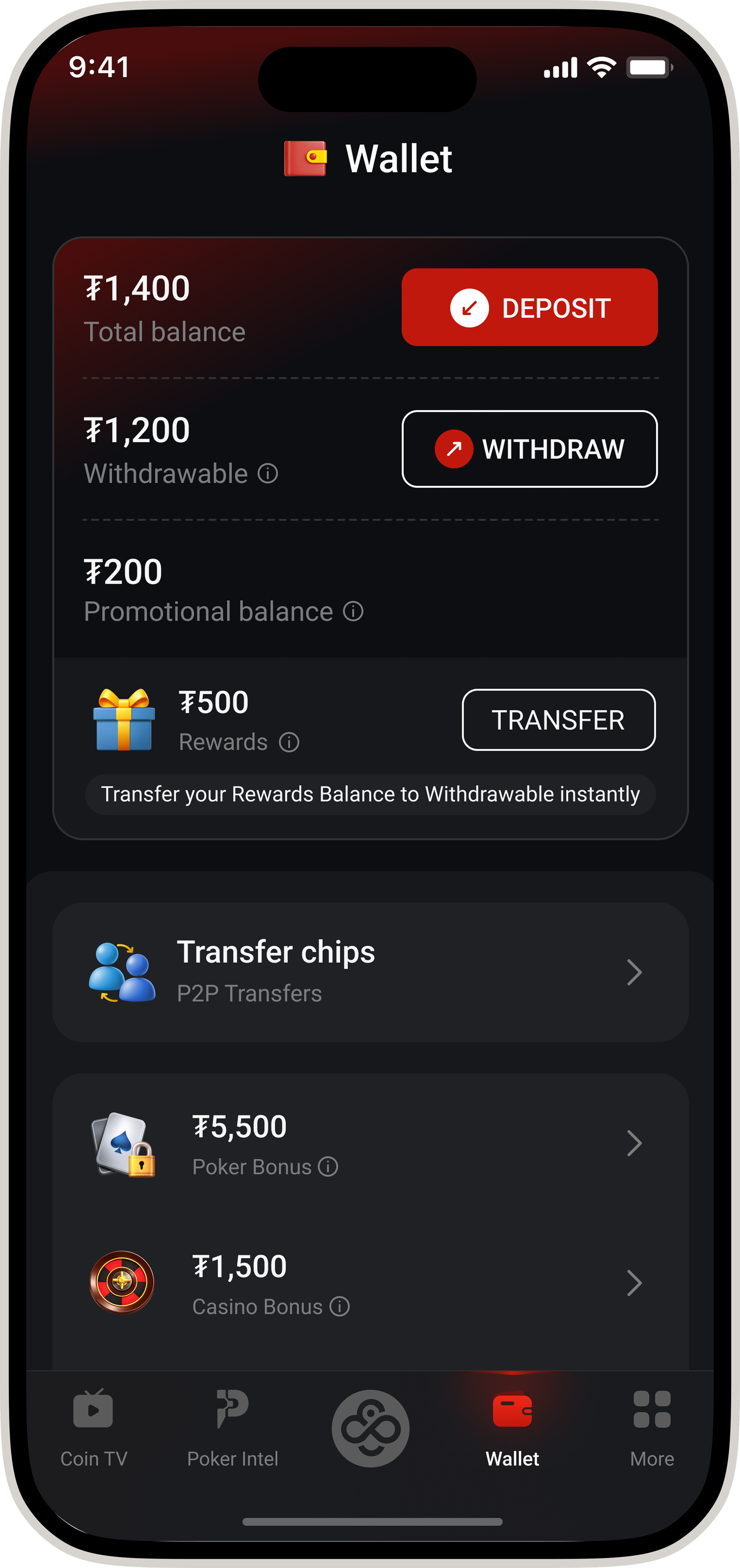
About
Overview
Players regularly support each other financially through staking, bankroll sharing, and tournament funding. However, these interactions relied on external crypto transfers, creating friction and disrupting gameplay.
To solve this, I designed a native P2P transfer system that enabled players to move USDT-based chips directly between accounts without leaving the platform.
Research
Understanding the Existing Experience
When players wanted to fund another player, they had to leave the platform and rely on external crypto transfers.
Players were already transferring value between each other—but the platform wasn't part of that journey.
Player A → Withdraw USDT → External Wallet → Send Crypto → Player B Deposits → Play
This created friction, delayed gameplay, and pushed liquidity outside the ecosystem.
As a result, one of the most common financial interactions between players existed entirely outside the product.
Understanding User Psychology
Because chips represented real USDT value:
1 Chip = 1 USDT
Players approached transfers with the mindset of financial transactions rather than gaming interactions.
Before sending money, users needed confidence that:
they selected the correct recipient
the transfer amount was accurate
the transaction could be tracked afterward
they understood the impact on their balance
Key Insights
Players Didn't Want Transfers. They Wanted Participation.
During exploration, I realized players weren't looking for a better way to transfer money.
They were looking for a better way to:
fund tournament entries
stake other players
share bankrolls
support friends within the community
This shifted the problem from:
"How do we help users transfer money?"
to
"How do we help players move liquidity between accounts?"
That insight transformed the project from a wallet feature into an ecosystem design problem.
Strategy
Identifying the Opportunity
Beyond a Transfer Feature
The opportunity wasn't to build a transfer feature.
The opportunity was to create an internal liquidity layer that allowed value to move directly between players without leaving the ecosystem.
Business Impact
By enabling this behavior natively, we could:
reduce transfer friction
shorten funding cycles
support staking behaviors
improve player retention
keep liquidity active within the platform
Defining the Design Challenge
How might we enable instant movement of playable value while maintaining user confidence and minimizing mistakes?
The challenge wasn't speed alone.
Crypto users already expect speed.
The challenge was creating confidence around irreversible value movement.
Ideation & Journey Mapping
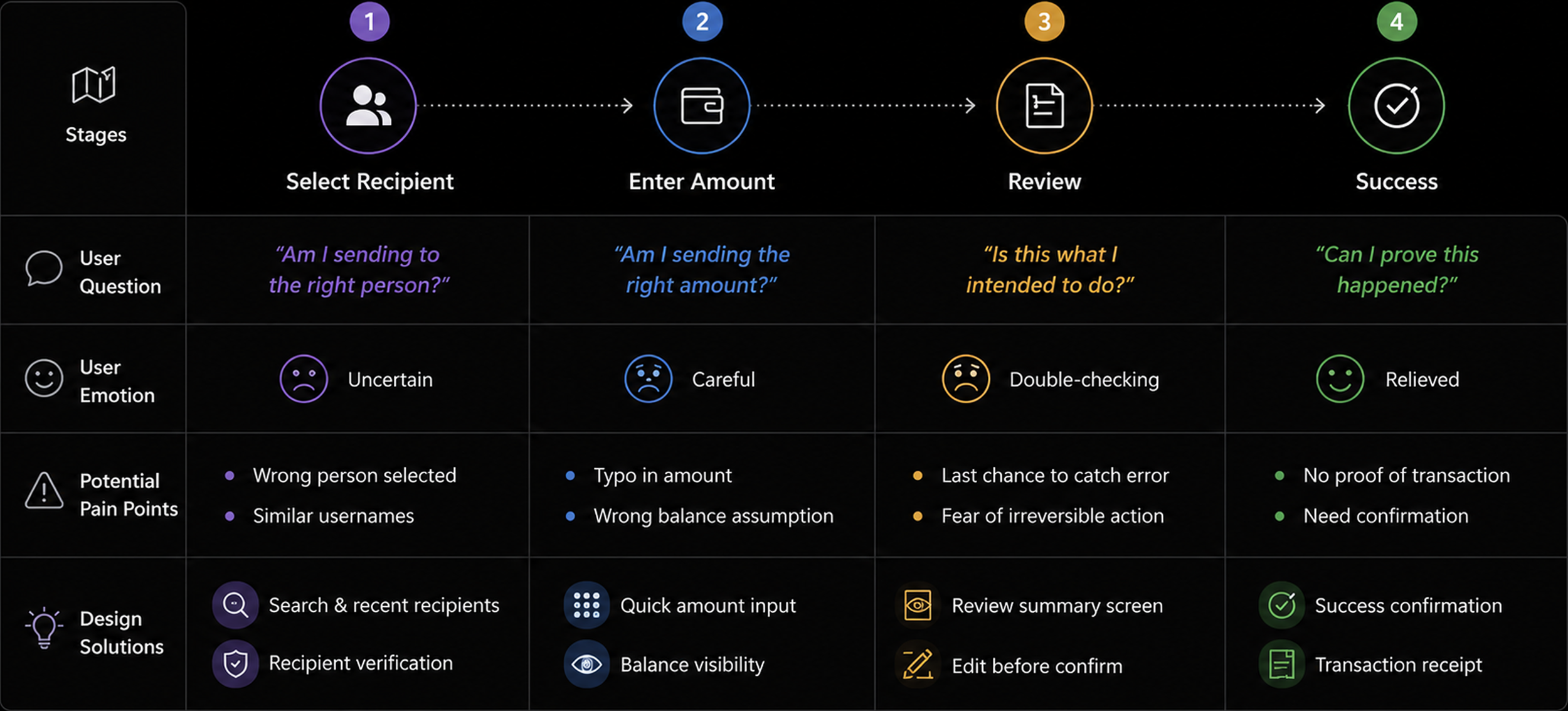
Mapping the Transfer Journey
I mapped the emotional state of users throughout the transfer experience.
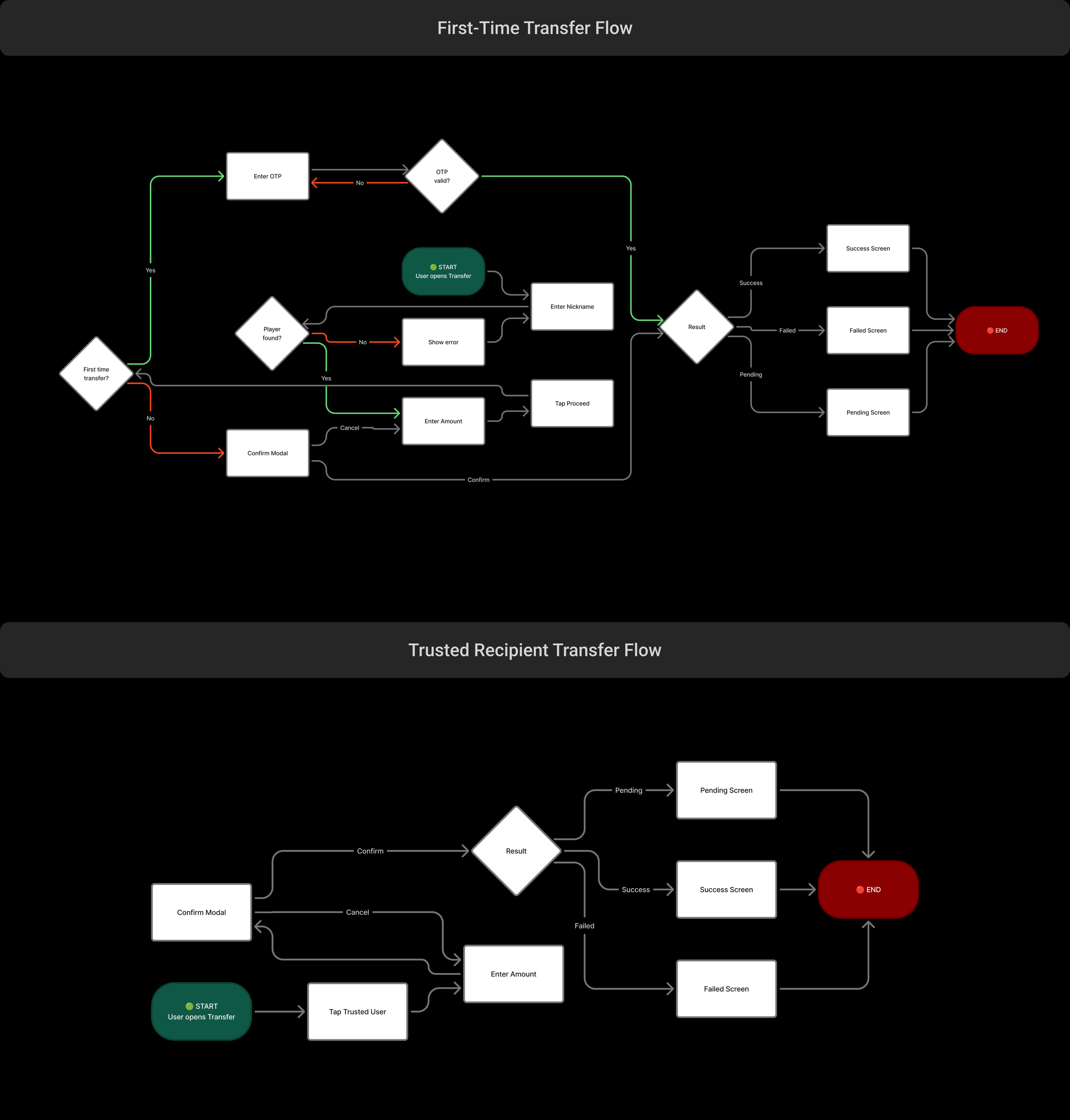
Defining User Flows for First-Time and Trusted Users
Balancing security and usability through distinct flows for first-time and repeat transfers.
Explorations & Iterations
Design Decisions
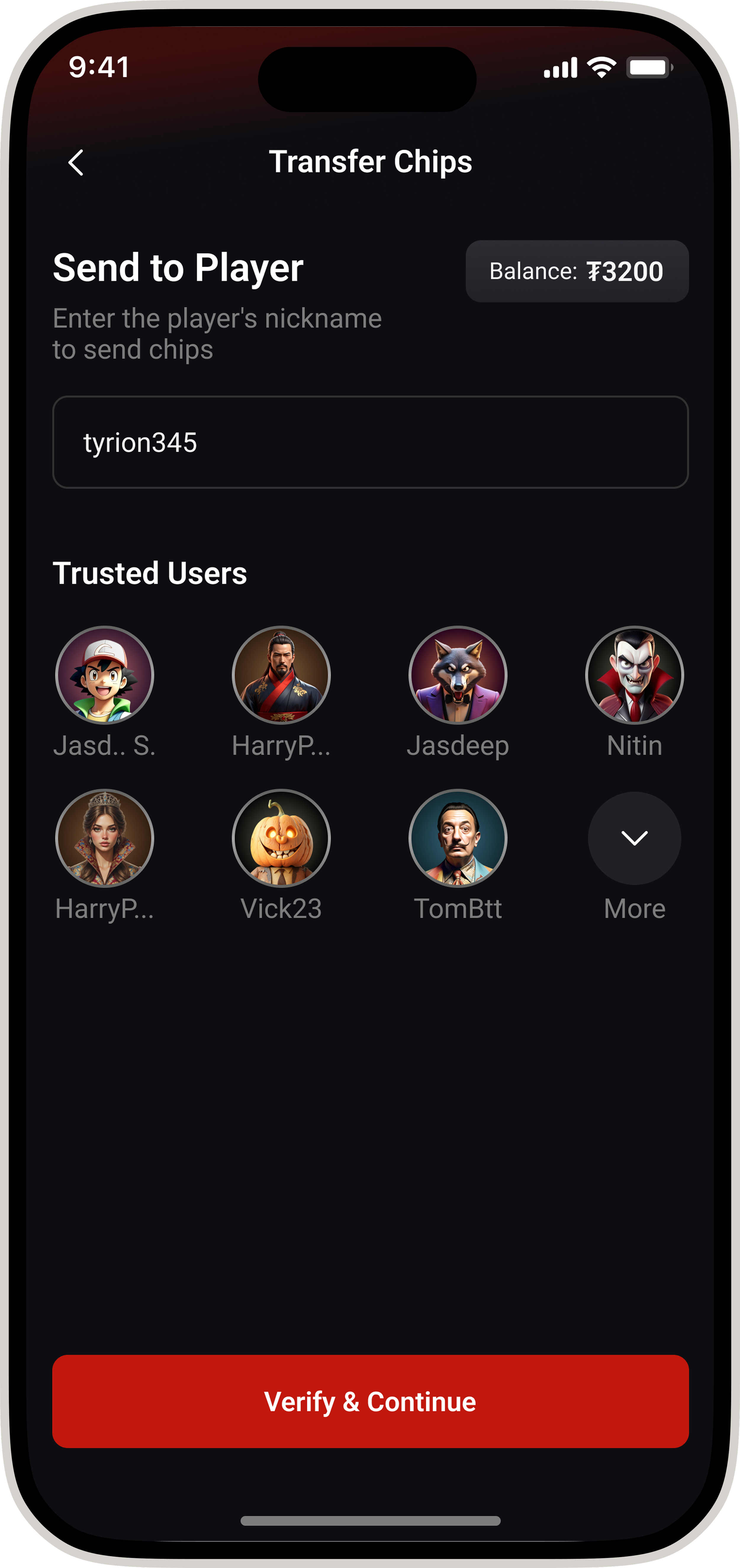
Building Recipient Confidence
Problem
Nicknames were players' main IDs, and similar ones posed risks. Even tiny errors in crypto transfers could be costly.
Solution
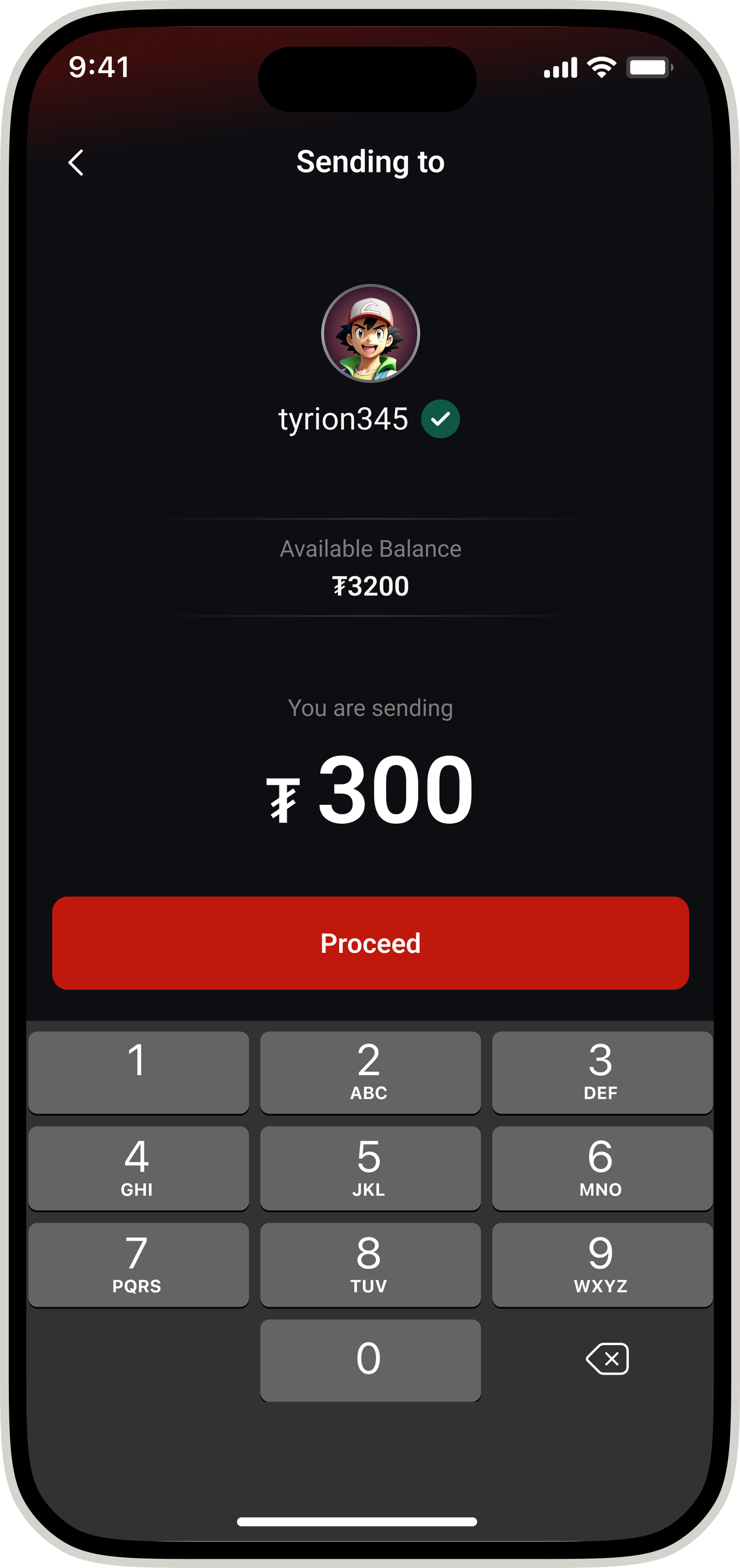
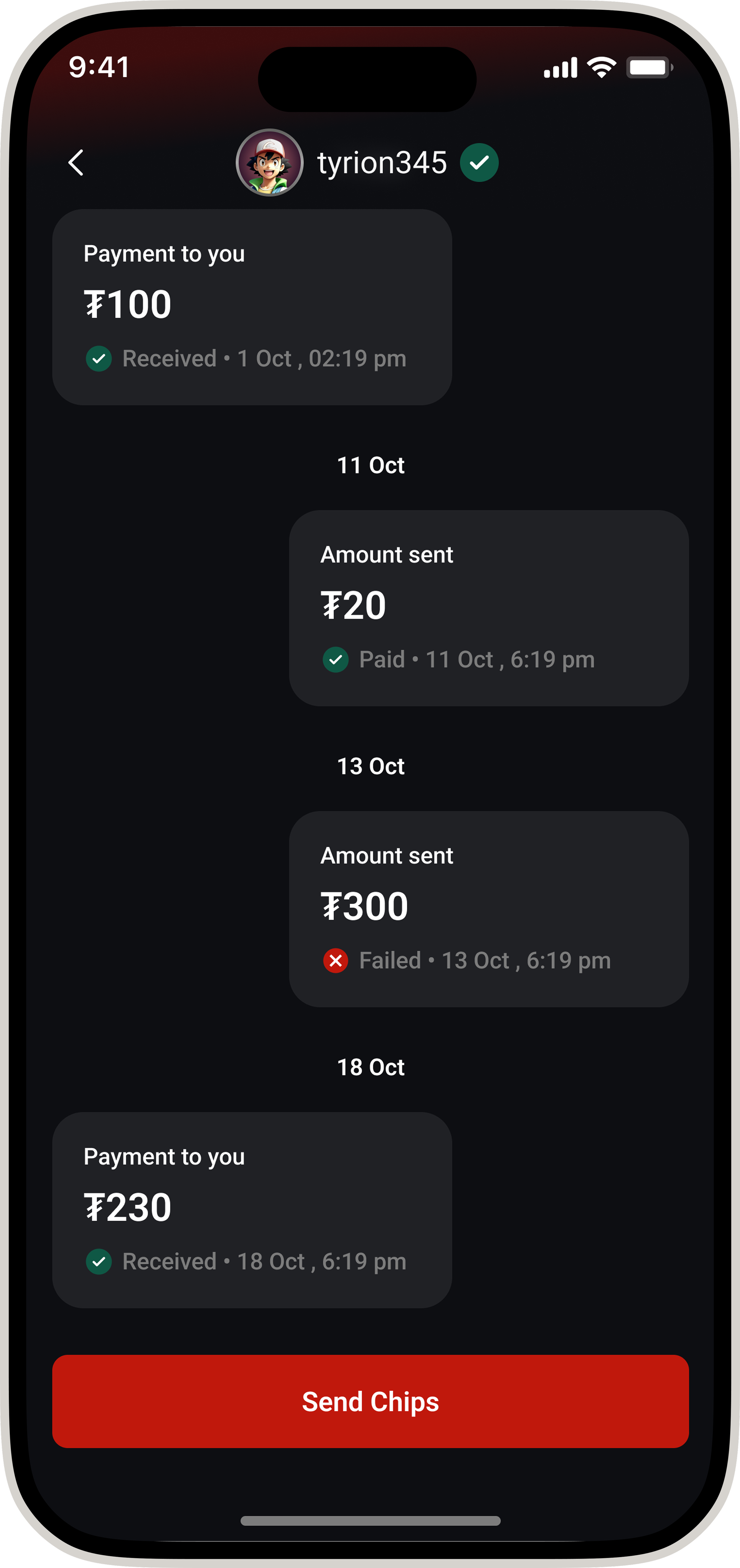
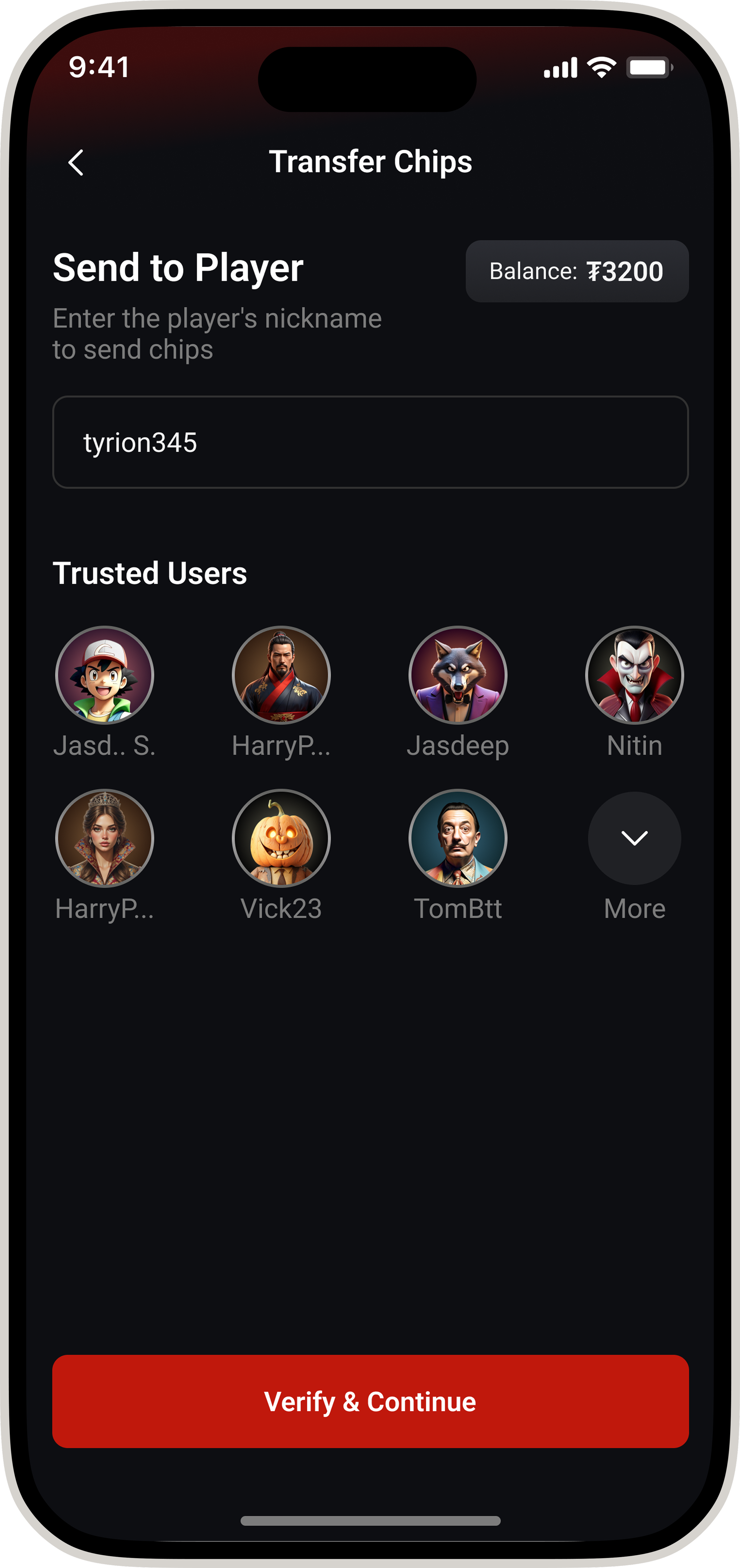
I added verification cues: avatar, full username, recipient preview, recent transfer history
Outcome
Reduced ambiguity and increased recipient certainty.
Progressive Confirmation Model
Problem
Requiring OTP verification for every transfer improved security but added unnecessary friction for frequent transfers.
Solution
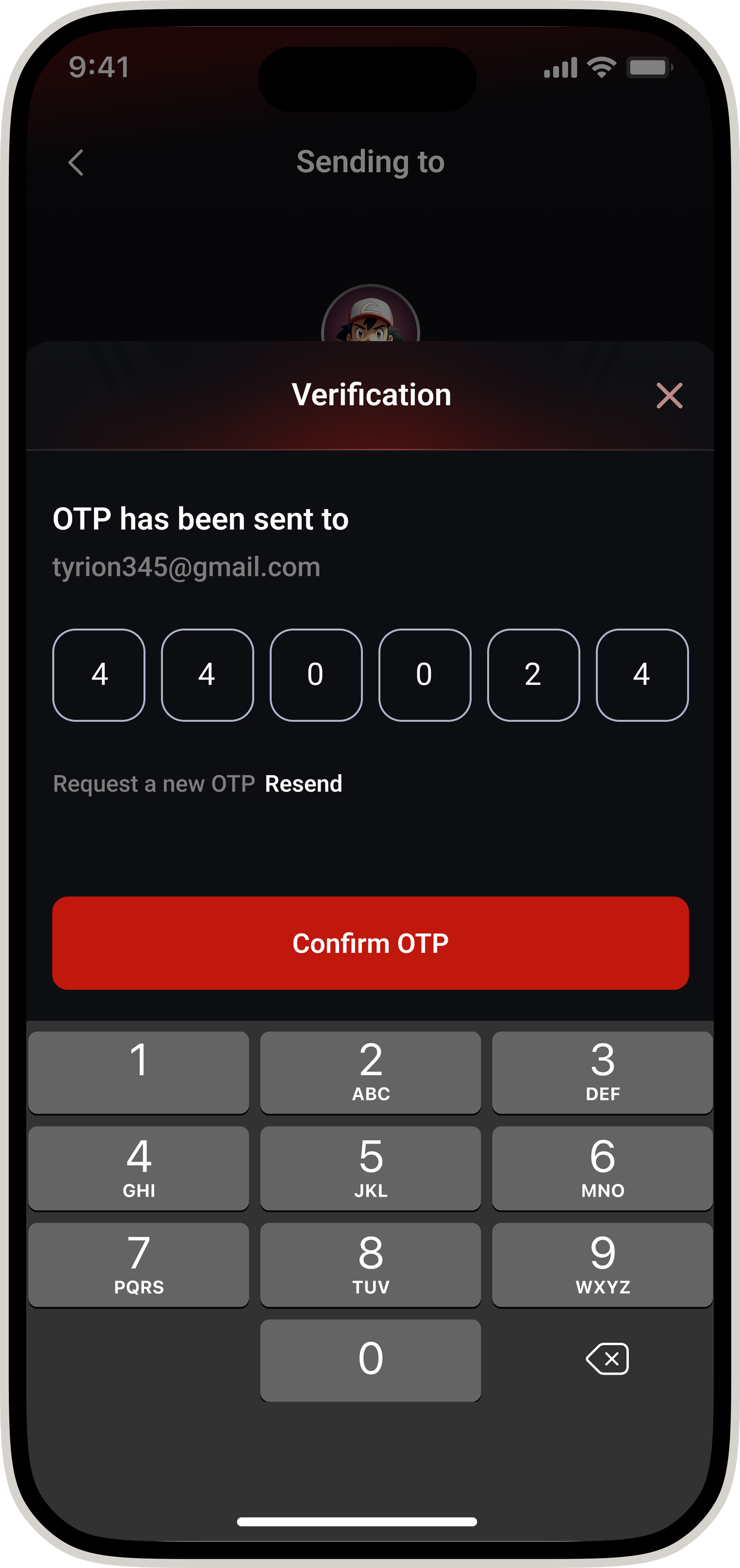
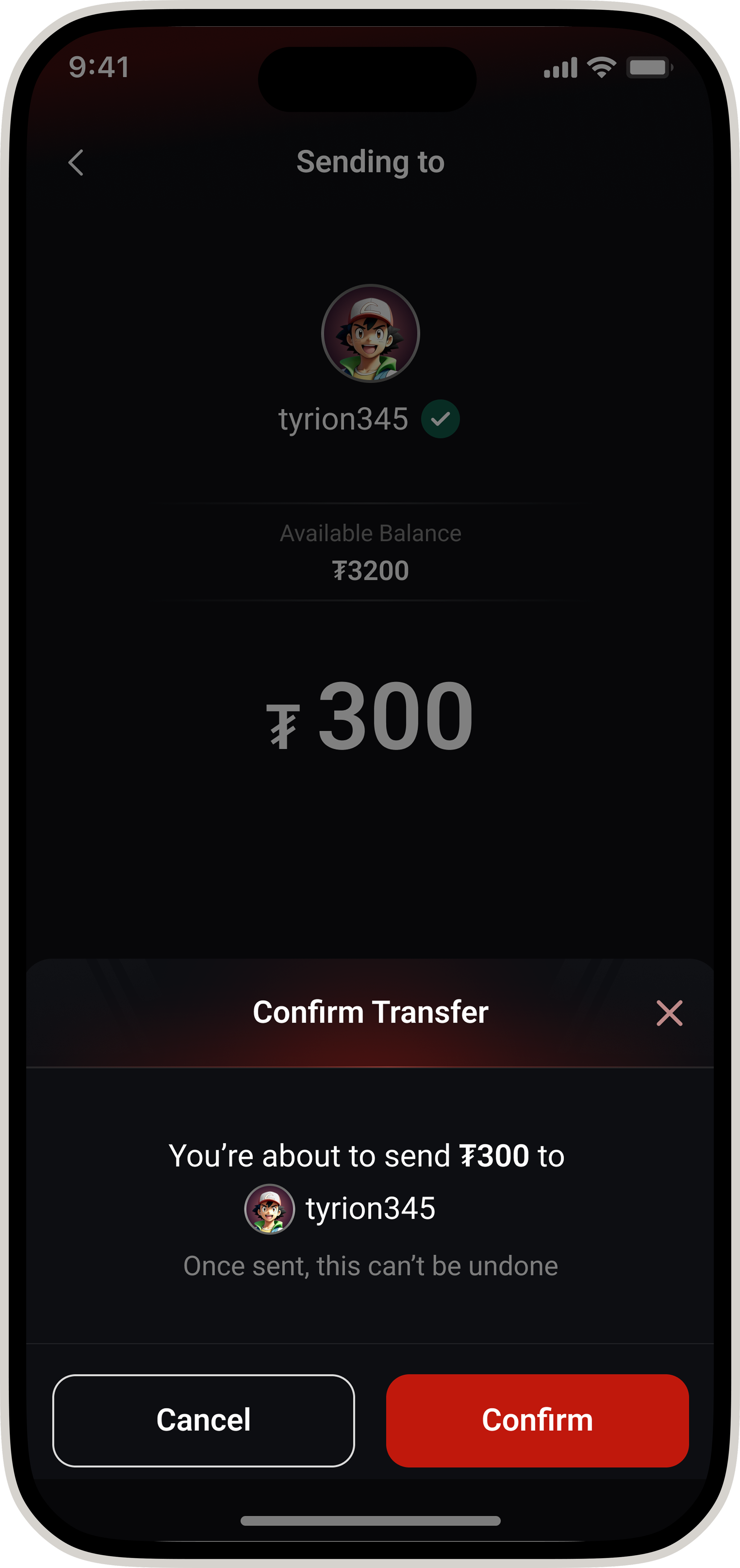
For first-time transfers, users verify the transaction using OTP to confirm intent and establish trust.
For subsequent transfers to the same recipient, OTP is replaced with a confirmation modal where users review recipient details and transfer amount before proceeding.
Outcome
Balanced security and usability by providing stronger verification for new recipients while enabling faster repeat transfers with minimal friction.
Designing for Transparency
Problem
Users wanted confidence after the transaction was completed.
Solution
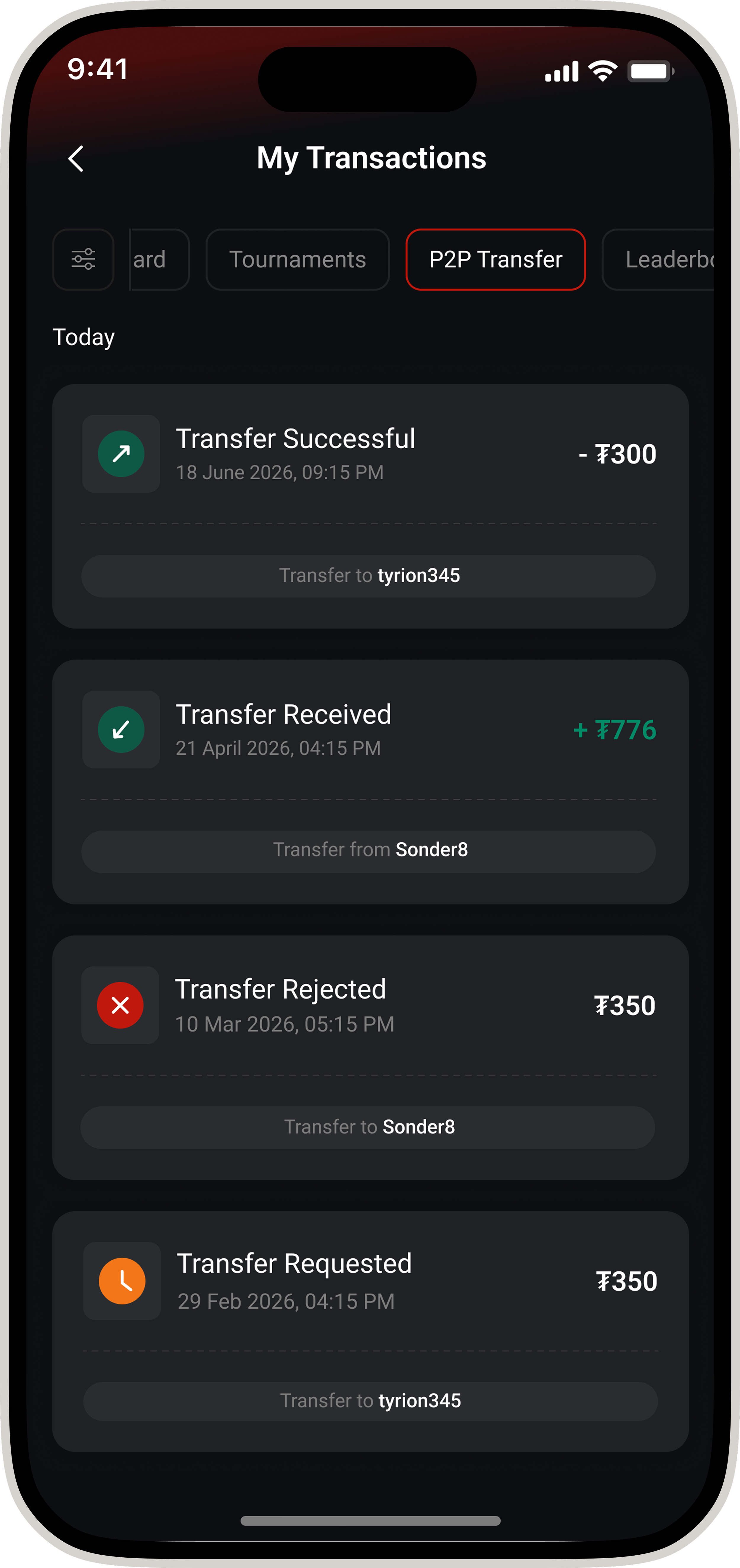
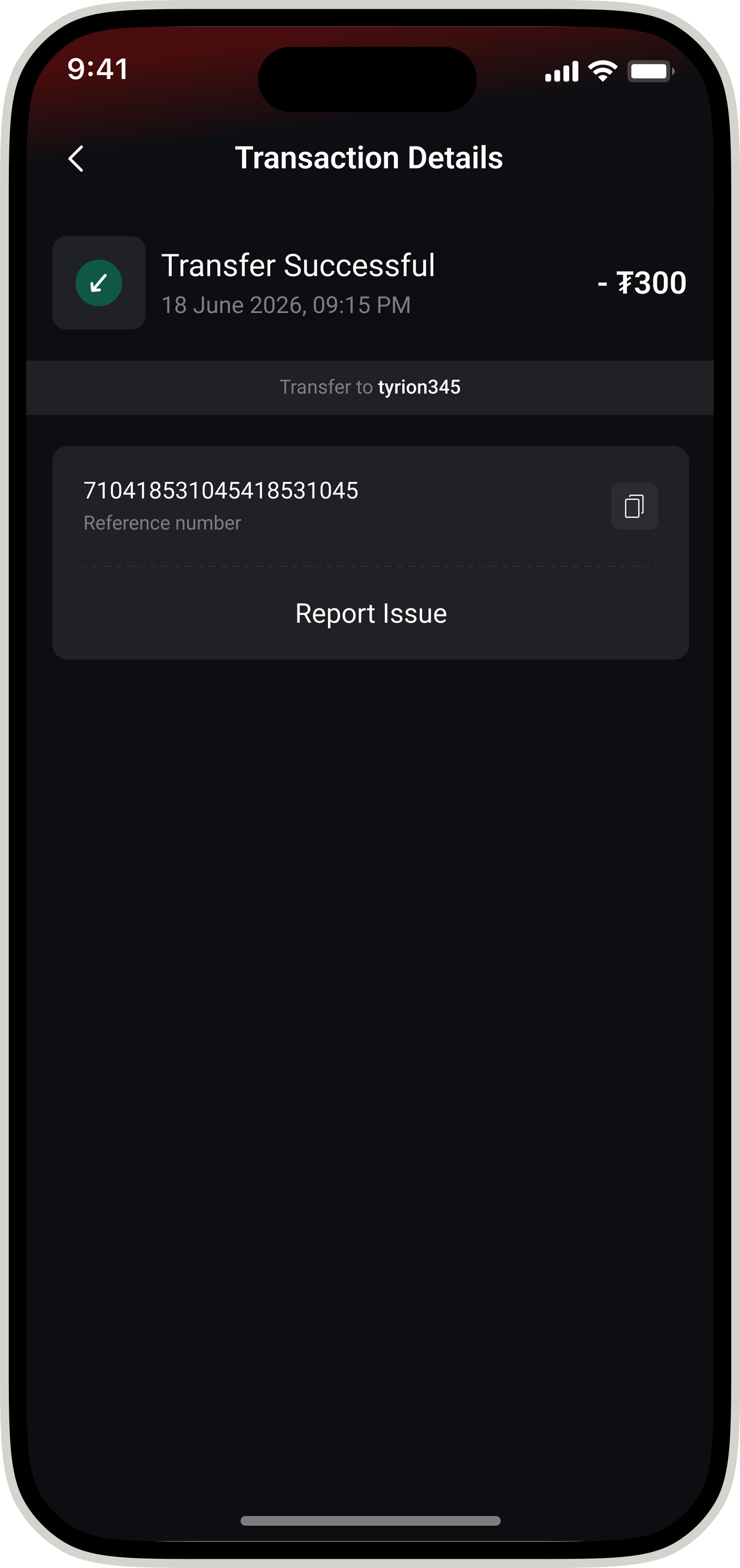
I designed a transaction tracking system featuring detailed transfer histories, unique IDs, secure receipts, and precise timestamps. This ensures real-time status visibility, allowing users to effortlessly monitor and verify their financial activity.
Outcome
Created stronger post-transfer trust.
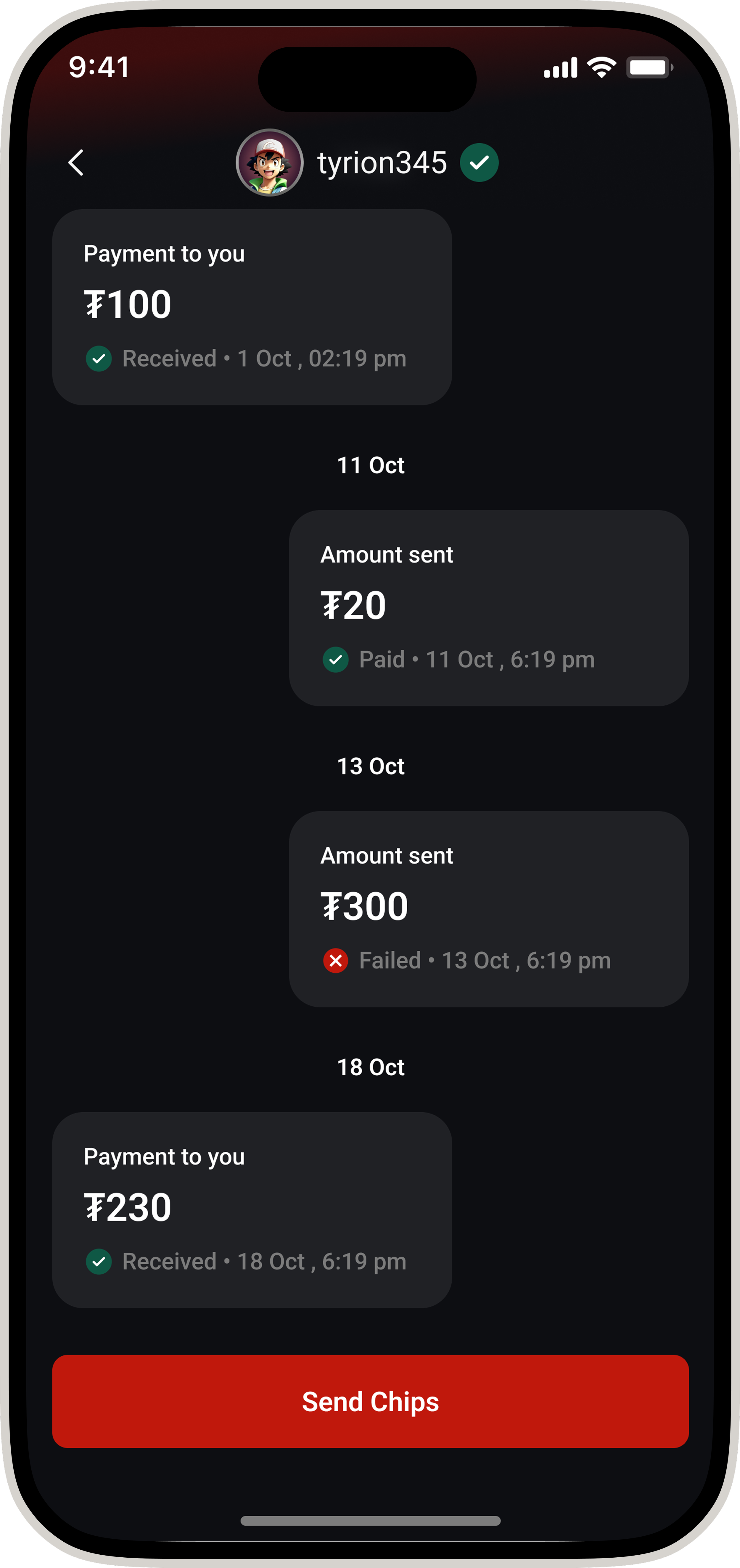
Reducing Friction for Repeat Behavior
Problem
Many transfers occurred between the same players repeatedly
Solution
Surfaced recent recipients, previous transfer connections, and repeat transfer shortcuts to help users transfer money faster with less effort.
Outcome
Improved efficiency without compromising confidence.
Preventing Costly Errors
Problem
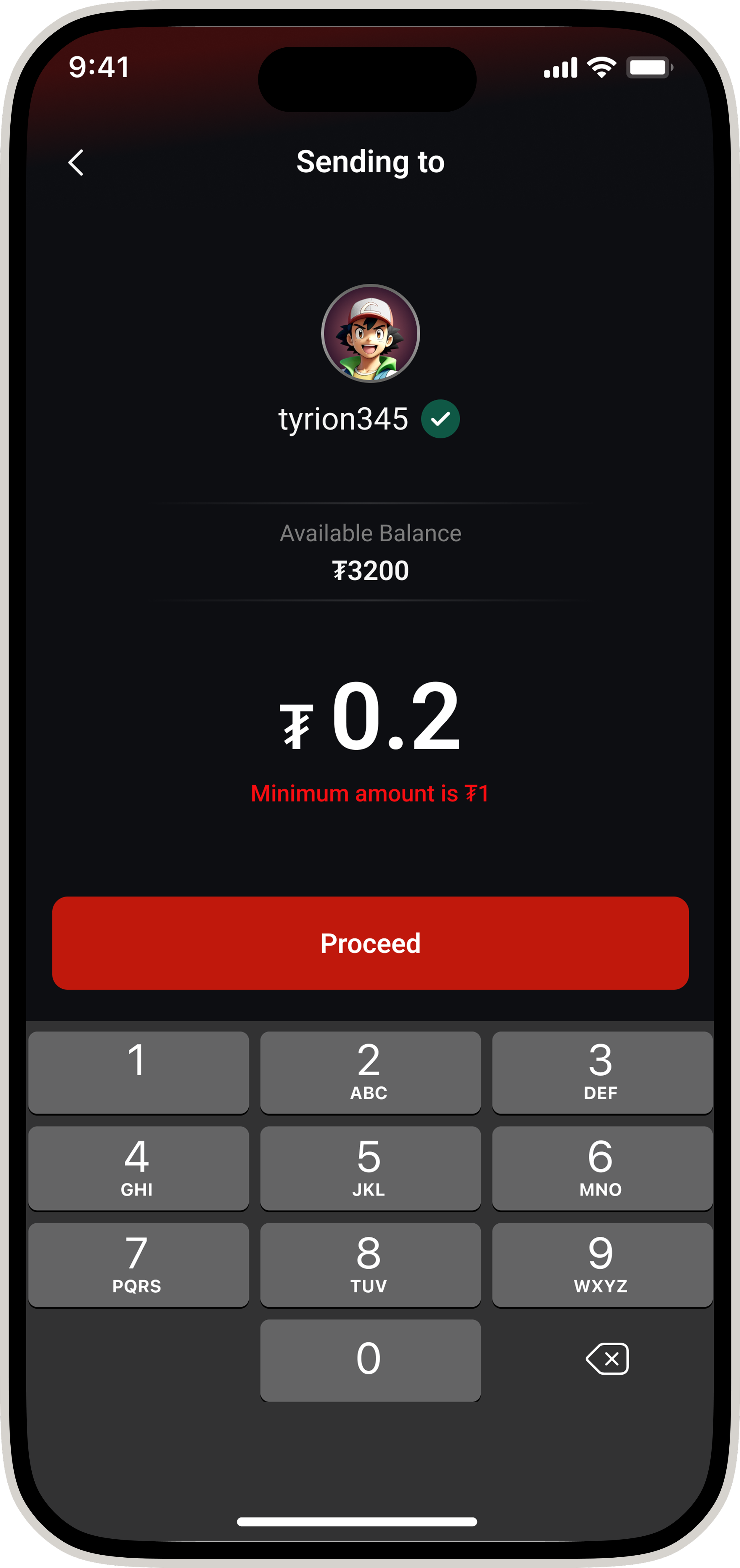
Amount-entry mistakes become expensive when real value is involved.
Solution
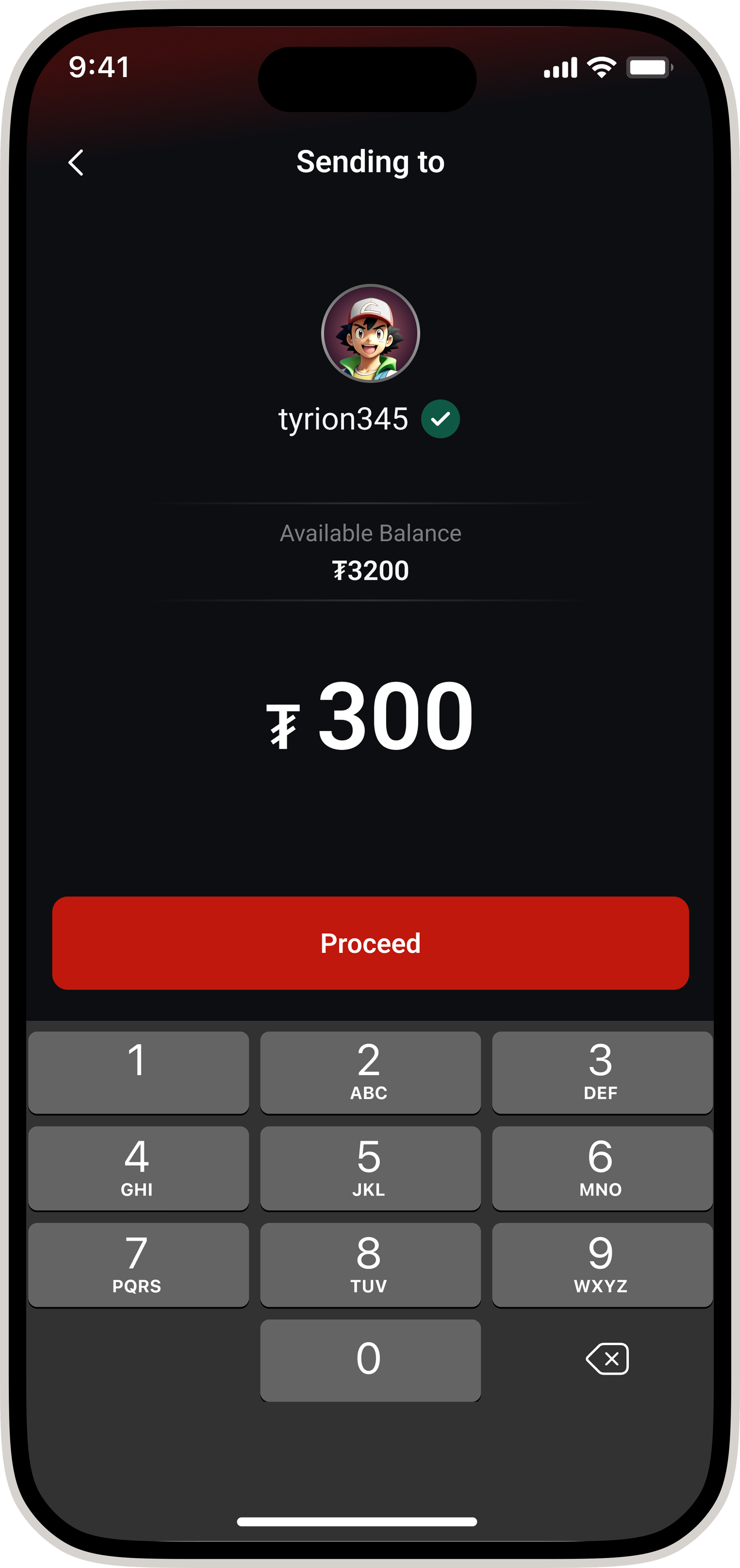
Introduced formatted amount inputs, available balance visibility, remaining balance previews, and clear insufficient balance states to help users enter amounts confidently and avoid transfer errors.
Outcome
Reduced avoidable mistakes.
Trade-offs & Constraints
Balancing Speed and Confidence
Moving money between players is a high-trust action. While the goal was to make transfers quick, optimizing solely for speed could increase mistakes, fraud concerns, and user anxiety.
I evaluated each design decision against two dimensions: efficiency and trust.
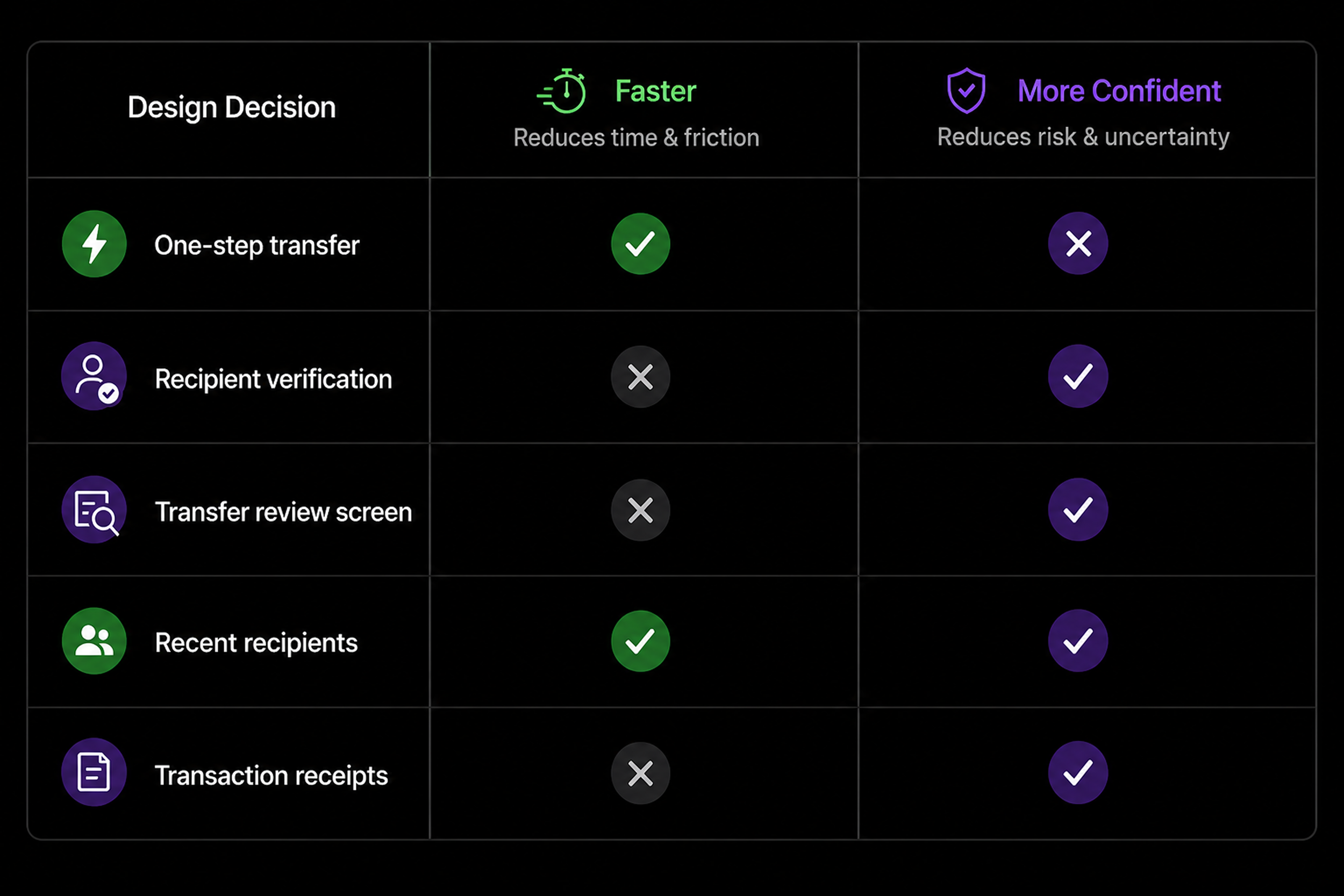
The final experience strikes a balance between:
Efficiency — users can transfer money quickly to familiar recipients.
Accuracy — users can verify recipient details before sending.
Trust — users receive confirmation and proof of completed transactions.
As a result, the journey remains fast without compromising user confidence in moving real money.
Visuals
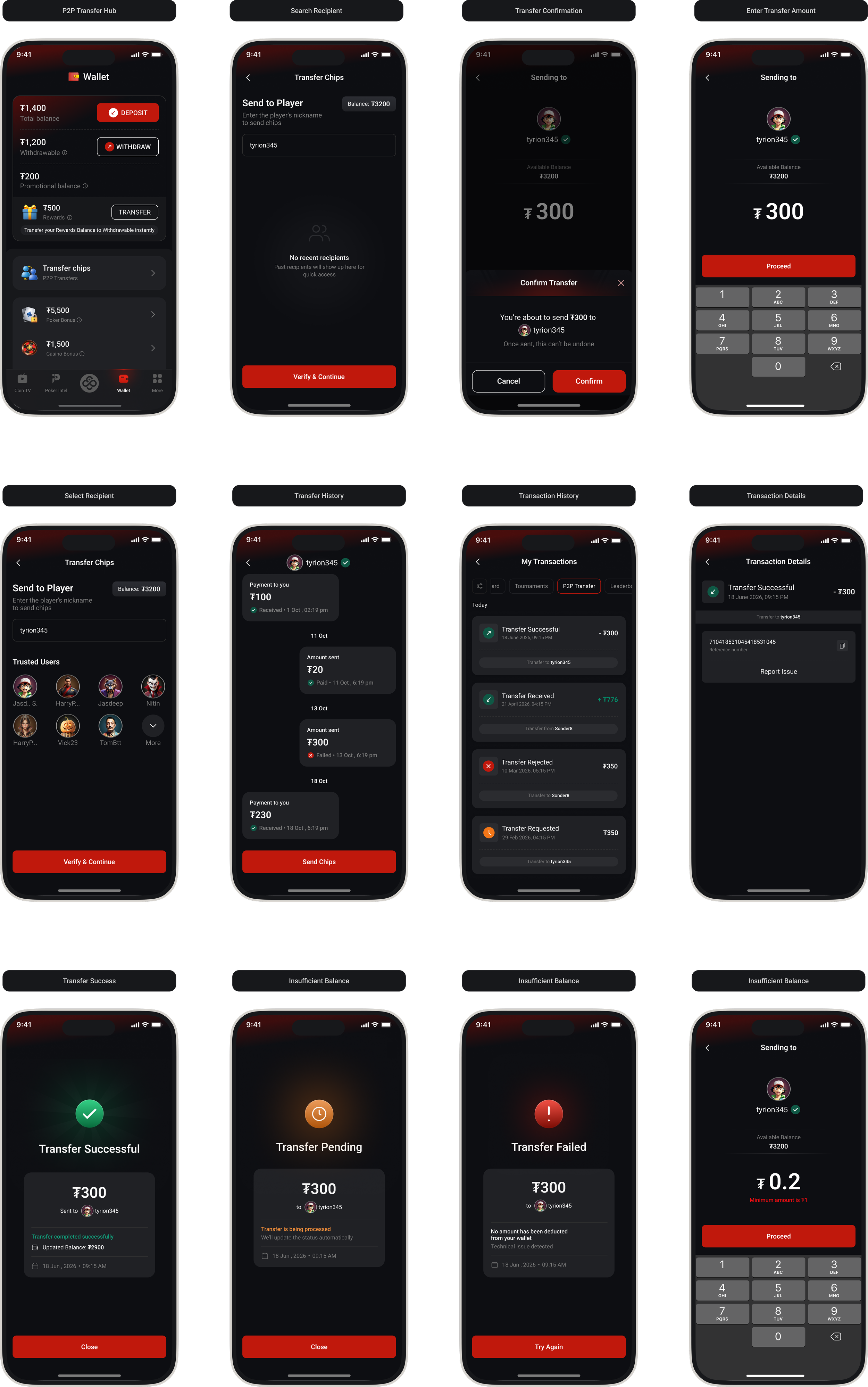
We explored multiple visual directions before arriving at a clean and trust-focused design. The final approach emphasized clarity, recipient visibility, and transaction transparency, helping users move real value with confidence while keeping the experience simple and intuitive.
Impact
Before
Player A → External Wallet → Crypto Transfer → Deposit → Play
Engagement Increase
Player A → P2P Transfer → Play
Revenue Growth
By removing unnecessary steps, the platform became a more natural place for players to support one another financially.
The feature achieved:
25% adoption rate, indicating strong acceptance among players who needed to move value within the ecosystem.
15% repeat usage, demonstrating that players found the experience valuable enough to incorporate into their regular gameplay and funding activities.
Key Takeaway
I didn't design a way to send money. I designed infrastructure that allowed value to move naturally between members of a poker community.